Business
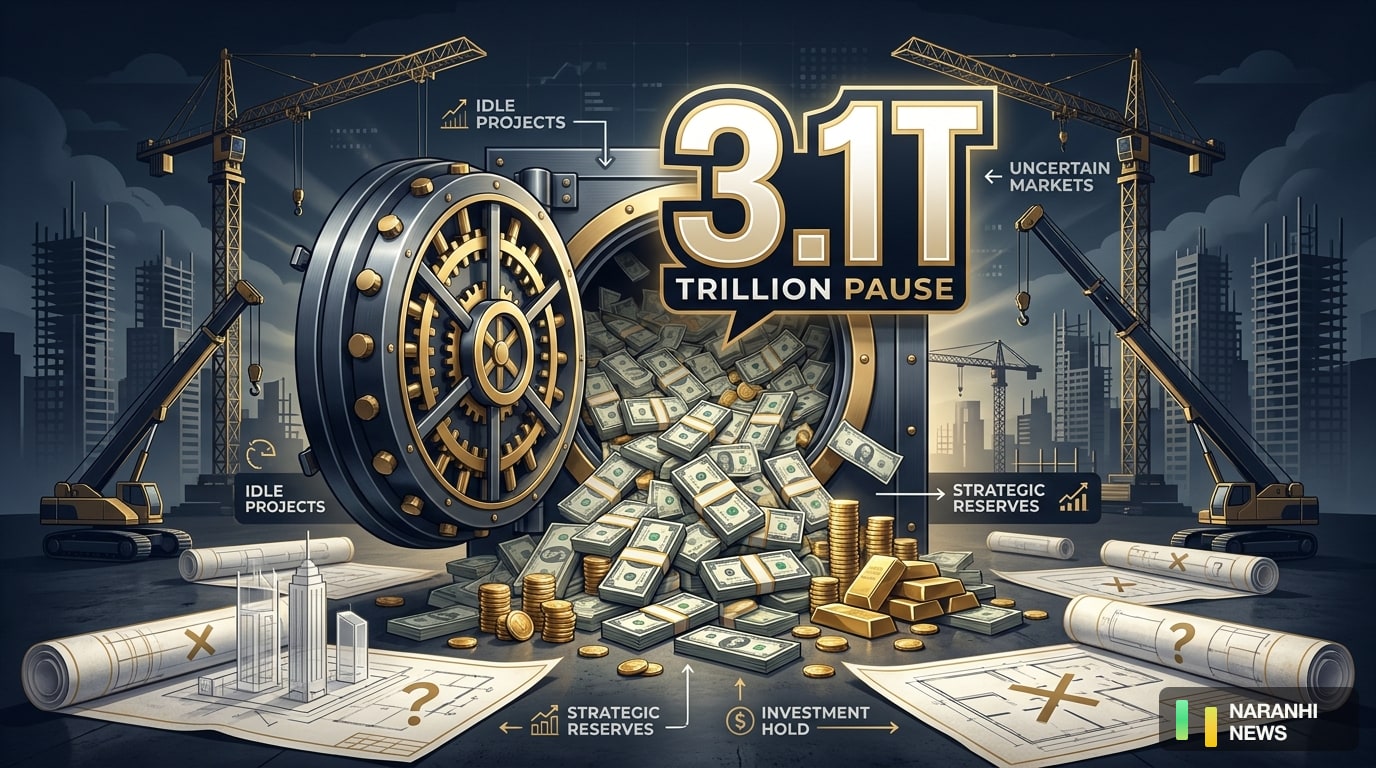
The $3.1 Trillion Pause: Why Corporate America Is Hoarding Cash Instead of Building
3.1조 달러의 멈춤: 왜 기업들은 투자 대신 현금을 쌓고 있는가
읽기 도움말단어 수준자주 쓰는 3,000 단어가 본문의 85%예요. 그 밖의 단어는 100단어에 15개꼴이에요.
- 1K65%
- 2K15%
- 3K5%
- 5K5%
- 5K+10%
5,000 단어 밖 trillion · remarkably · expenditure · weakest · pandemic · accumulation · precedent · comparable
Record Cash, Zero Action
S&P 500 companies are sitting on a record $3.1 trillion in cash and short-term investments — and, remarkably, they are not spending it. In the first quarter of 2026, capital expenditure growth among S&P 500 non-financial companies slowed to just 3.2% — the weakest pace since 2016, excluding the pandemic years when the global economy effectively shut down. The scale of the accumulation is without modern precedent. Between 2020 and the end of 2025, S&P 500 companies added roughly $800 billion in cash and near-cash reserves — equivalent to the annual GDP of Switzerland — without deploying a comparable increment into factories, research, or workforce expansion.
S&P 500 기업들은 역대 최고인 3.1조 달러의 현금과 단기 투자 자산을 보유하고 있으며, 놀랍게도 그 돈을 쓰지 않고 있습니다. 2026년 1분기 S&P 500 비금융 기업들의 자본 지출 성장률은 3.2%에 그쳤으며, 이는 세계 경제가 사실상 멈췄던 팬데믹 시기를 제외하면 2016년 이후 가장 낮은 수치입니다. 이 축적의 규모는 현대 전례가 없어요. 2020년부터 2025년 말까지 S&P 500 기업들은 약 8,000억 달러의 현금과 준현금성 자산을 추가했어요. 스위스의 연간 GDP에 해당하는 금액이에요. 하지만 그에 상응하는 금액을 공장, 연구, 또는 인력 확장에는 투자하지 않았어요.
What Is Capex — And Why Does It Matter?
Capital expenditure, or capex, refers to the money companies spend on long-lived assets: new factories, upgraded equipment, research facilities, and the technology infrastructure that underpins future production. When capex stalls, an economy's productive capacity stops growing. Instead of building, many CEOs are choosing to buy back their own stock. In just the first three months of 2026, S&P 500 companies spent $285 billion on share repurchases — a form of capital allocation that returns money to existing shareholders but does nothing to expand factories, hire workers, or develop new products. The contrast with the previous decade is stark. Between 2010 and 2019, US corporations increased their capital expenditure by an average of 6.8 percent annually — rebuilding factories, expanding data centers, and investing in supply chain resilience. In the current environment, that same cohort of companies is instead prioritizing financial engineering over operational investment.
자본 지출(capex)이란 기업이 장기 자산에 투자하는 비용을 말합니다: 새로운 공장, 업그레이드된 장비, 연구 시설, 그리고 미래 생산을 뒷받침하는 기술 인프라가 여기에 해당합니다. capex가 멈추면 경제의 생산 능력도 성장을 멈춥니다. 새로운 것을 짓는 대신, 많은 CEO들은 자사주 매입을 선택하고 있습니다. 2026년 1분기에만 S&P 500 기업들은 2,850억 달러를 자사주 매입에 지출했으며, 이는 기존 주주들에게 돈을 돌려주지만 공장 확장, 인력 채용, 신제품 개발에는 아무 역할도 하지 못하는 자본 배분 방식입니다. 이전 10년과의 대비는 극명해요. 2010년부터 2019년까지 미국 기업들은 연평균 6.8%씩 자본 지출을 늘렸어요. 공장을 재건하고, 데이터 센터를 확장하며, 공급망 회복력에 투자했어요. 현재 환경에서는 같은 기업 집단이 운영 투자 대신 재무 공학을 우선시하고 있어요.
The Policy Uncertainty Trap
Why the hesitation? Economists point to a deeply uncertain policy environment. Shifting tariffs, rapid geopolitical fragmentation, and unclear government incentive structures all make long-term investment feel more like gambling than planning. When a company cannot reliably predict what a product will cost to manufacture in two years — because tariff rules might change, supply chains might be rerouted to new countries, or promised tax credits might disappear — the rational response is simply to wait and see. A survey of 300 CFOs conducted by the National Association of Business Economists in March 2026 found that 68 percent cited geopolitical uncertainty as their primary reason for delaying large capital projects — above labor costs, interest rates, or demand uncertainty, each of which would have ranked first at almost any other point in the last two decades.
왜 이렇게 주저하는 걸까요? 경제학자들은 깊은 정책 불확실성 환경을 지목합니다. 변동하는 관세, 빠른 지정학적 분열, 불분명한 정부 인센티브 구조가 모두 장기 투자를 계획이 아닌 도박처럼 느끼게 만듭니다. 기업이 2년 후 제품 제조 원가를 믿을 수 있게 예측할 수 없을 때 — 관세 규칙이 바뀔 수도 있고, 공급망이 새로운 국가로 재편될 수도 있으며, 약속된 세금 공제가 사라질 수도 있기 때문에 — 합리적인 대응은 단순히 기다리며 지켜보는 것입니다. 2026년 3월 미국경제학회가 실시한 300명의 CFO 대상 설문에서 68%가 대형 자본 프로젝트를 연기하는 주된 이유로 지정학적 불확실성을 꼽았어요. 인건비, 금리, 수요 불확실성보다 높은 순위로, 지난 20년 중 거의 어느 시점에서든 1위를 차지했을 항목들이에요.
A Self-Reinforcing Cycle
The danger, economists warn, is that this behavior becomes self-reinforcing. When every large company defers investment simultaneously, aggregate demand weakens, growth slows, and the uncertainty that initially justified the pause only deepens further — creating a cycle that is very difficult to break. JPMorgan CEO Jamie Dimon captured the mood in his annual shareholder letter, warning of "converging storm clouds" from trade fragmentation and ballooning sovereign debt. He raised the bank's US recession probability estimate to 35% for 2026–2027 and called for a coordinated G20 response before the cycle becomes entrenched.
경제학자들이 경고하는 위험은 이 행동이 자기 강화적이 된다는 것입니다. 모든 대기업이 동시에 투자를 미루면, 총수요가 약해지고, 성장이 둔화되며, 처음에 기다림을 정당화했던 불확실성이 더욱 깊어지면서 — 끊기 매우 어려운 악순환을 만들어냅니다. JP모건 CEO 제이미 다이먼은 연례 주주 서한에서 이러한 분위기를 잘 표현했습니다. 그는 무역 분열과 부풀어 오르는 국가 부채로 인한 "수렴하는 폭풍 구름"을 경고하며, 2026~2027년 미국 경기침체 확률 추정치를 35%로 높이고, 이 악순환이 굳어지기 전에 G20의 조율된 대응을 촉구했습니다.
Korea Is Not Immune
The pattern is not unique to the United States. South Korean conglomerates — including Samsung Electronics, SK Hynix, and Hyundai Motor — are facing the same dilemma. Samsung alone holds roughly 90 trillion won in liquid assets, even as shareholders and the government push for higher dividends and domestic investment. The Korean context adds a further complication: the country's largest conglomerates face significant capital allocation pressure from institutional shareholders who have absorbed the lessons of Japan's TSE reforms. These investors are pushing Korean boards to justify cash accumulation more rigorously than at any point in the past decade. International institutional investors see cash hoarding as a that controlling shareholders prioritize their own flexibility over minority investor returns — a concern that echoes the original case for the Korea Discount and will remain a pressure point for any administration trying to attract foreign capital.
이 패턴은 미국에만 국한되지 않습니다. 삼성전자, SK하이닉스, 현대자동차를 비롯한 한국의 대기업들도 같은 딜레마에 직면해 있습니다. 삼성 하나만 해도 약 90조 원의 유동 자산을 보유하고 있으며, 주주들과 정부는 더 높은 배당과 국내 투자를 요구하고 있습니다. 한국의 맥락은 또 다른 복잡성을 더해요. 한국 최대 대기업들은 일본 TSE 개혁의 교훈을 흡수한 기관 주주들로부터 상당한 자본 배분 압력을 받고 있어요. 이 투자자들은 지난 10년 중 어느 시점보다 더 엄격하게 현금 축적을 정당화하도록 한국 이사회를 압박하고 있어요. 국제 기관 투자자들은 현금 비축을 지배주주가 소수주주 수익보다 자신의 유연성을 우선시한다는 신호로 봐요. 이는 코리아 디스카운트의 원래 근거와 공명하는 우려이며, 외국 자본을 유치하려는 어떤 행정부에게도 압박 요인으로 남을 거예요.
The bigger picture
Whether you run a company or invest in one, the $3.1 trillion corporate cash freeze is a worth reading carefully: when the most capable companies refuse to deploy capital, the question is what they know about uncertainty that you should be factoring into your own plans.
회사를 운영하든 투자하든, 3.1조 달러의 기업 현금 동결은 여러분이 신중하게 읽을 만한 신호예요. 세계에서 가장 능력 있는 기업들이 자본 배치를 거부할 때, 질문은 그들이 틀렸느냐가 아니에요. 그들이 불확실성에 대해 알고 있는 것 중 여러분 자신의 계획에 반영해야 할 것이 무엇인가예요.
Recall
다시 읽기 전에, 떠올려 보세요
한국어 문장을 보고 빈칸에 들어갈 영어 표현을 써 보세요. 다시 읽는 것보다 기억에서 꺼내 볼 때 더 오래 남아요.
이 칼럼이 마음에 드셨나요?
새 칼럼이 발행되면 영문 + 한글 본문을 통째로 메일로 보내드려요. 매일 아침, 광고 없이.
언제든 한 번에 해지할 수 있어요.